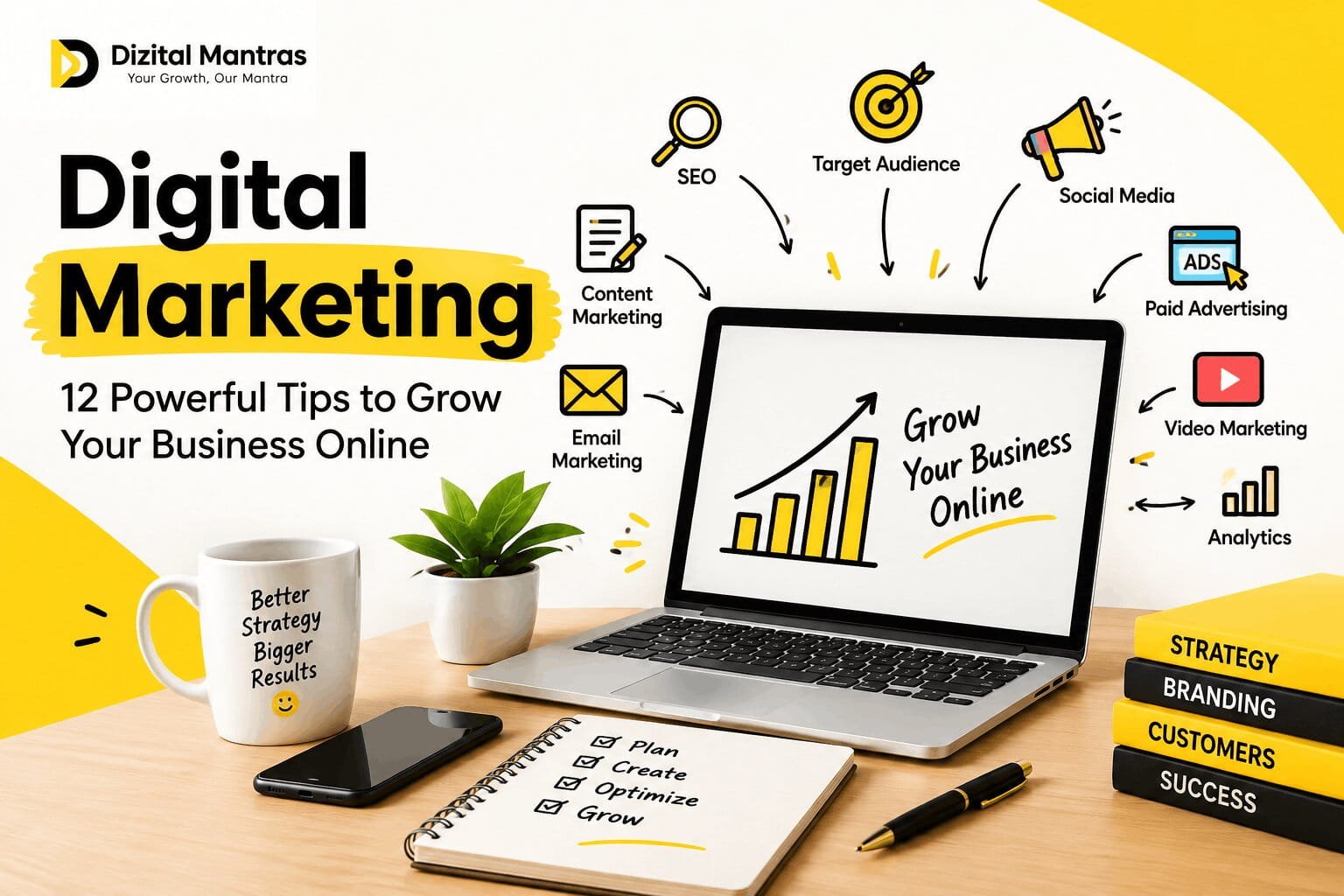
In today’s competitive online world, having a strong digital marketing strategy is essential for businesses of every size. Customers now search, compare, communicate, and make purchasing decisions online. A well-planned digital marketing approach helps businesses reach the right audience, build trust, generate leads, and increase sales.
However, simply being present on the internet is not enough. Successful digital marketing requires consistent effort, useful content, smart targeting, and regular performance analysis. Here are practical tips to help your business strengthen its online presence.
1. Start With Clear Digital Marketing Goals
Every successful digital marketing campaign should begin with a clear goal. Decide what you want to achieve before choosing platforms or creating content.
Your goal could be increasing website traffic, generating leads, improving brand awareness, growing online sales, or increasing customer engagement.
Use specific and measurable targets. For example, instead of saying “increase traffic,” aim to “increase organic website traffic by 25% within six months.”
Clear goals make it easier to measure the success of your digital marketing efforts.
2. Understand Your Target Audience
Knowing your audience is one of the most important parts of digital marketing. You need to understand who your customers are, what they need, and what influences their buying decisions.
Study their age, interests, location, online behavior, challenges, and preferences. Customer reviews, website analytics, surveys, and social media interactions can provide useful insights.
When you understand your audience, you can create messages that feel relevant instead of generic.
3. Create Valuable Content
Content is at the heart of effective digital marketing. People are more likely to trust a business that consistently provides useful information.
Create blogs, videos, guides, infographics, social media posts, case studies, and other content that answers real customer questions.
Avoid creating content only to promote your products. Focus on solving problems, explaining complicated topics, and helping your audience make informed decisions.
High-quality content can also improve search visibility and support long-term digital marketing growth.
4. Optimize Your Website for Digital Marketing
Your website is often the center of your digital marketing strategy. Make sure it is fast, mobile-friendly, easy to navigate, and simple to understand.
Every important page should have a clear purpose and an effective call to action. Visitors should quickly understand what you offer and what they should do next.
Use descriptive page titles, relevant keywords, optimized images, readable content, and strong internal linking. A good website can turn digital marketing traffic into actual customers.
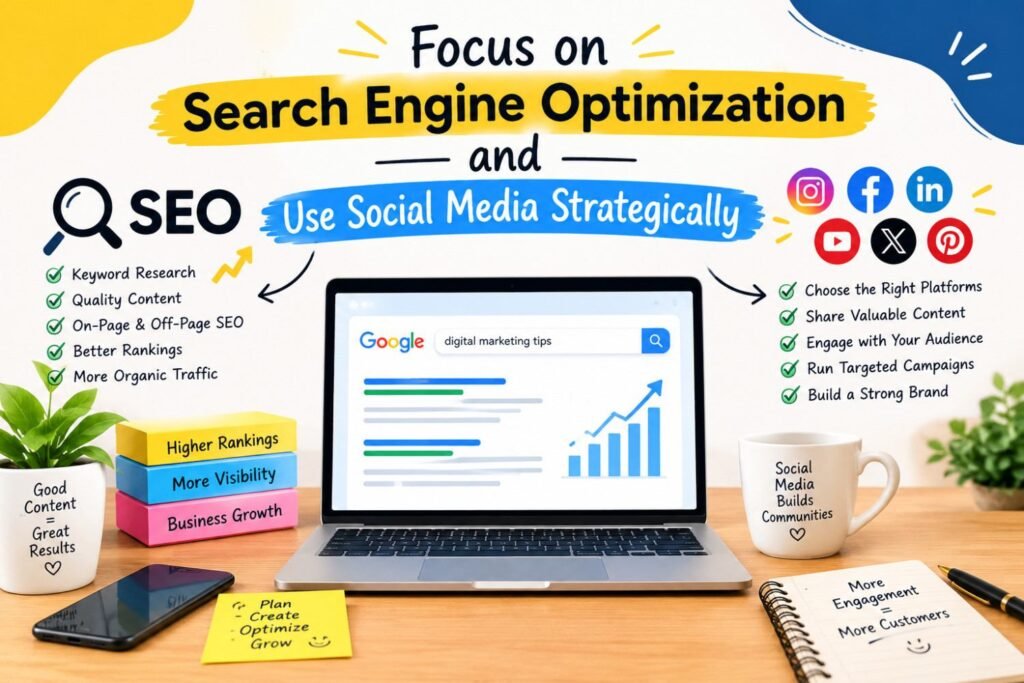
5. Focus on Search Engine Optimization
Search engine optimization, or SEO, is a powerful part of digital marketing because it helps your website appear when people search for relevant information.
Research keywords related to your products and services. Use them naturally in headings, page content, image descriptions, and metadata.
At the same time, prioritize helpful and original content rather than filling pages with keywords. Search engines increasingly reward websites that provide a useful experience.
Consistent SEO can create a steady source of traffic without relying entirely on paid advertising.
6. Use Social Media Strategically
Social media can expand the reach of your digital marketing campaigns and create direct connections with potential customers.
You do not need to be active on every platform. Choose channels where your target audience spends the most time.
Share a combination of educational content, behind-the-scenes updates, customer stories, product information, short videos, and interactive posts.
Respond to comments and messages regularly. Social media works best when it becomes a conversation rather than a one-way promotional channel.
7. Build an Email Marketing Strategy
Email marketing remains a useful digital marketing tool for nurturing relationships with customers.
Build an email list through your website using valuable offers, newsletters, downloadable resources, or special updates. Avoid purchasing random email lists, as they can damage engagement and trust.
Segment your audience based on interests or behavior. Personalized emails are often more relevant than sending the same message to everyone.
A consistent email strategy can encourage repeat purchases and keep your brand memorable.
8. Try Paid Digital Marketing Campaigns
Organic growth takes time, so paid advertising can help businesses reach potential customers faster. Platforms such as search engines and social networks allow advertisers to target audiences based on different characteristics.
Start with a manageable budget and test different headlines, creatives, offers, and audience segments.
Do not judge a campaign only by clicks. Track meaningful metrics such as leads, conversions, customer acquisition cost, and return on investment.
Testing and optimization are essential for profitable digital marketing advertising.
9. Use Video in Your Digital Marketing
Video has become an important content format for modern digital marketing. Short videos can explain products, answer questions, demonstrate services, and show your brand personality.
You can create tutorials, customer testimonials, product demonstrations, FAQs, educational clips, or quick tips.
Your videos do not always need expensive production. Clear information, good lighting, useful visuals, and authentic communication can be more valuable than a large production budget.
Video in Your Digital Marketing

10. Track Your Digital Marketing Performance
One of the biggest advantages of digital marketing is the ability to measure results.
Monitor website traffic, engagement, conversion rates, email performance, social media growth, and advertising results.
Look at which campaigns bring valuable customers rather than focusing only on vanity metrics such as likes or impressions.
Review your data regularly and use it to improve your strategy. Successful businesses treat digital marketing as an ongoing process, not a one-time activity.
11. Build Trust Through Reviews and Proof
Trust plays a major role in online purchasing decisions. Include genuine customer reviews, testimonials, case studies, ratings, certifications, and success stories in your digital marketing strategy.
Respond professionally to both positive and negative feedback. Honest communication can strengthen your reputation.
When potential customers see evidence that others have had a positive experience, they may feel more confident choosing your business.
12. Keep Your Digital Marketing Strategy Flexible
Online trends, customer behavior, algorithms, and technologies continue to change. A strategy that works today may need adjustment tomorrow.
Keep learning about new platforms, content formats, SEO practices, and customer expectations.
Experiment with new ideas, but evaluate them using real data. Flexibility allows your digital marketing strategy to remain relevant and competitive.
Conclusion
Effective digital marketing is not about following every trend or spending the biggest budget. It is about understanding your audience, providing genuine value, building trust, and making decisions based on measurable results.
Start with clear goals, create useful content, optimize your website, use social media wisely, invest in SEO, and continuously analyze your performance. Most importantly, stay consistent and focus on the needs of your customers.
With the right strategy and execution, digital marketing can help your business build a stronger online presence, attract qualified customers, and achieve sustainable growth. For businesses looking for expert guidance and result-oriented strategies, Dizital Mantras can be a valuable partner in turning online opportunities into meaningful business results.
Leave a Reply